The Best Birth Control Methods: Which One Is Right for You?
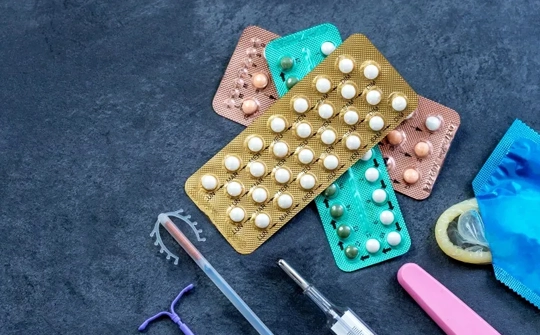
Why Is Choosing a Birth Control Method a Personal Decision?
Birth control is not just about choosing a method to prevent pregnancy; it is a health decision that should be made by considering a woman’s age, health status, menstrual pattern, plans for having children, breastfeeding status, medications, and personal expectations together. For this reason, there is no single answer to the question “What is the best birth control method?” that applies to everyone.
While an IUD may be the most suitable option for one woman, the birth control pill, an implant, or condoms may be a better choice for another. The best birth control method is not the one that seems most effective for everyone; it is the one that best suits a person’s health, lifestyle, and expectations.
The following questions can guide the choice:
- Pregnancy plans: If pregnancy is planned within a few months, short-acting methods may be more suitable; if no pregnancy is planned for several years, long-acting methods such as an IUD or implant may be better. If a couple has completed their family, permanent methods may be considered.
- Health status: Estrogen-containing methods (the combined pill, monthly injection, vaginal ring, and patch) are not suitable for every woman. The CDC’s 2024 Medical Eligibility Criteria provide detailed guidance for choosing a method safely based on a patient’s medical characteristics.
- Ease of use: Taking a pill every day is easy for some, but may be unreliable for those who tend to forget.
- Menstrual pattern: Some methods reduce menstrual bleeding, while others may increase it or make it irregular.
- Infection risk: Methods other than condoms do not protect against sexually transmitted infections.
Who Should Not Use Estrogen-Containing Methods?
The combined birth control pill, monthly injection, vaginal ring, and birth control patch contain estrogen. Because estrogen can increase the risk of blood clots, these methods should not be used, or should be evaluated very carefully, in the following situations:
- Migraine with aura
- A history of blood clots (deep vein thrombosis, pulmonary embolism)
- Certain cardiovascular diseases and a history of stroke
- Uncontrolled high blood pressure
- Active breast cancer
- Smoking over the age of 35
- The first weeks after childbirth
In these situations, estrogen-free methods (an IUD, implant, progestin-only pill, three-month injection, or condoms) may be preferred. For this reason, blood pressure measurement, a medical history, and a risk assessment should be carried out before starting a hormonal method.
How Effective Are Birth Control Methods?
The table below shows the approximate pregnancy rates within the first year of typical use in everyday life. The lower the rate, the more effective the method.
| Method | Pregnancies per 100 women in 1 year |
|---|---|
| Birth control implant | Less than 0.1 |
| Hormonal IUD | 0.1–0.4 |
| Vasectomy | 0.15 |
| Tubal ligation | 0.5 |
| Copper IUD | 0.8 |
| Three-month injection | 4 |
| Birth control pill, ring, and patch | 7 |
| Male condom | 13 |
| Withdrawal | 20 |
| Natural methods (calendar, ovulation tracking) | 2–23 |
As the table shows, the implant and IUD, which are least prone to user error, are the most effective reversible methods.
The Best Birth Control Methods
Long-Acting Methods: IUD and Implant
Intrauterine devices (IUDs) and the implant are known as long-acting reversible contraception (LARC). According to ACOG (American College of Obstetricians and Gynecologists) and the CDC (U.S. Centers for Disease Control and Prevention),these are the most effective reversible methods. Their biggest advantages are that they do not need to be remembered every day and that fertility returns quickly once they are removed.
Although these methods are often seen as “insert and forget,” patients should attend follow-up visits after insertion to check bleeding patterns, pain, signs of infection, and the possibility of the device moving out of place.
Hormonal IUD
The hormonal IUD is a levonorgestrel-releasing intrauterine device placed inside the uterus that releases a low dose of a progestin hormone. It thickens cervical mucus, making it harder for sperm to pass, and thins the lining of the uterus.
Its most important advantage is that it reduces menstrual bleeding. In women with heavy periods, anemia, adenomyosis, or painful periods, it can provide therapeutic benefits in addition to contraception. In some women, periods may stop completely over time; this is an expected effect caused by thinning of the uterine lining and is not harmful.
Irregular spotting is common in the first 3–6 months and decreases over time in most patients. Risks include cramping during insertion, rarely expulsion of the IUD, infection, and very rarely uterine perforation. It can also be used by women who have never given birth; however, a gynecological examination and, if necessary, an ultrasound should be performed beforehand.
Copper IUD
The copper IUD contains no hormones. It prevents fertilization by creating an environment inside the uterus that is unfavorable to sperm. It is a good option for women who do not want to use hormones, who are breastfeeding, or for whom hormonal methods are not advisable. Smaller sizes are also available for women who have never given birth.
Its main disadvantage is that it may increase menstrual bleeding and cramping. For this reason, it may not be the first choice for women who already have heavy and painful periods. The copper IUD is also the most effective method of emergency contraception (see details below).
Birth Control Implant
The birth control implant is a small, flexible etonogestrel-releasing rod placed under the skin of the inner upper arm. It prevents pregnancy by suppressing ovulation and is the most effective of all methods. It is a good option for women who tend to forget pills, who are breastfeeding, or for whom estrogen is not suitable.
Its most common side effect is irregular bleeding: In some women, periods become infrequent or stop, while others experience unpredictable spotting. This bleeding is not medically dangerous but may affect quality of life. For this reason, possible changes in bleeding patterns are the most important topic to discuss before choosing an implant.
Birth Control Pills
Combined birth control pills contain estrogen and a progestin; they suppress ovulation, thicken cervical mucus, and thin the uterine lining. They can regulate periods, reduce menstrual pain and heavy bleeding, and help with acne in some patients. They may also be used in polycystic ovary syndrome to regulate periods and reduce androgenic symptoms.
Their main disadvantage is that they must be taken regularly every day; missing pills reduces their effectiveness. Nausea, breast tenderness, breakthrough bleeding, or headaches may occur. Because they contain estrogen, they are not suitable in the situations listed above.
Progestin-only pills do not contain estrogen. They are suitable for breastfeeding women and those for whom estrogen is not advisable. With some types, care must be taken to take the pill at the same time every day. Irregular bleeding or the absence of periods may occur; this is generally not harmful.
Birth Control Injections
Monthly injections contain estrogen and a progestin, so the same precautions as for combined pills apply. Three-month injections (depot medroxyprogesterone acetate) contain only a progestin and suppress ovulation. They may be an option for women who do not want to take a pill every day but also do not want an IUD or implant.
With the three-month injection, periods may become irregular or stop, and weight changes may occur. After stopping the injection, it takes an average of 10 months for fertility to return, and up to 18 months in some women. For this reason, it is not suitable for women planning a pregnancy in the near future. Because of its effect on bone density with long-term use, the decision should be made carefully, especially in adolescents and those at risk of osteoporosis.
Vaginal Ring and Birth Control Patch
The vaginal ring is inserted into the vagina, while the patch is applied to the skin and changed weekly. Both are combined methods containing estrogen and a progestin; they are practical because they do not need to be remembered every day, but they have the same contraindications as combined pills. The ring may cause a feeling of discharge or vaginal discomfort, while the patch may cause skin irritation.
Condoms
Although condoms are not as effective as an IUD or implant at preventing pregnancy, they are the only birth control method that protects against sexually transmitted infections. If there is a risk of infection, such as with a new or multiple partners, HPV, chlamydia, gonorrhea, or HIV, condoms should be added even if another method is being used. This is called dual protection.
The effectiveness of condoms depends on correct use: They should be put on from the start of intercourse, oil-based lubricants should not be used with latex condoms, and emergency contraception should be considered if the condom breaks or slips. People with a latex allergy can use polyurethane condoms.
Are Natural Methods and Withdrawal Reliable?
Methods such as the calendar method, ovulation tracking, basal body temperature measurement, cervical mucus monitoring, and withdrawal do not involve medication or devices; however, with typical use, the risk of pregnancy is significantly higher than with modern methods. Their reliability is especially limited in women with irregular periods.
Although withdrawal is widely used, it is not reliable; pre-ejaculate fluid may contain sperm, and timing errors are common. When pregnancy must be avoided, more effective methods should be preferred.
Permanent Birth Control Methods
For couples who have completed their family, tubal ligation for women and vasectomy for men may be considered. These methods are highly effective but are considered permanent; reversal is difficult and not always successful. For this reason, the decision should not be made hastily or under stress after childbirth.
Tubal ligation can be performed during a cesarean section, after childbirth, or as a separate laparoscopic procedure. Vasectomy is a simpler procedure but is not effective immediately; its effectiveness must be confirmed with a semen analysis.
Emergency Contraception
Emergency contraception is used to prevent pregnancy after unprotected intercourse, a broken condom, missed pills, or sexual assault. There are two options:
- Emergency contraceptive pills: Should be taken as soon as possible within 5 days of unprotected intercourse. They work by delaying ovulation; they do not end an existing pregnancy.
- Copper IUD: When inserted within 5 days (120 hours) of unprotected intercourse, it is more than 99% effective according to the WHO and is the most effective method of emergency contraception. Once inserted, it can continue to be used as a regular method of contraception.
Emergency contraceptive pills can be used again if needed; however, because they are not as effective as a regular method, they should not replace regular birth control. If they are needed frequently, switching to a more reliable method is recommended. If your period is late after emergency contraception, a pregnancy test should be taken.
Birth Control After Childbirth and During Breastfeeding
Pregnancy can occur earlier than expected after childbirth. Breastfeeding can only be considered protective when strict conditions are met: within the first 6 months after birth, the baby is exclusively breastfed, and periods have not yet returned. If any of these conditions is not met, breastfeeding is not a reliable method of contraception.
During breastfeeding, estrogen-containing methods are not recommended in the first weeks because of their effect on milk supply and the risk of blood clots. Progestin-only pills, the implant, the three-month injection, condoms, and IUDs are suitable options. The timing of IUD insertion should be planned according to the type of delivery, bleeding, and the recovery of the uterus. Ideally, a postpartum contraception plan should be discussed during pregnancy.
Which Birth Control Method Is Right for Whom?
- Women with heavy and painful periods: A hormonal IUD or combined pill; a copper IUD may worsen symptoms.
- Women who tend to forget pills: An implant or IUD.
- Women who do not want to use hormones: A copper IUD or condoms.
- Women for whom estrogen is not advisable: An IUD, implant, progestin-only pill, or three-month injection.
- Women planning a pregnancy soon: The pill, condoms, or other easily stopped methods; the three-month injection is not suitable.
- Women who value having regular periods: A combined pill or copper IUD may be more suitable than an implant or hormonal IUD, which can stop periods.
- Women at risk of infection: Condoms should always be used in addition to the chosen method.
Good contraceptive counseling should explain the options objectively and should not rely on fear or impose a single method. At our clinic in Ankara, Turkey, the choice of birth control method is planned together with a personal health assessment and detailed counseling.
Birth Control Methods: Frequently Asked Questions
What is the most effective birth control method?
Among reversible methods, the implant and IUD are the most effective. Because they depend very little on user error, their typical-use pregnancy rates are less than 1 in 100 women.
Are condoms enough on their own?
When used correctly and consistently, condoms reduce the risk of pregnancy, but with typical use they are not as effective as an IUD or implant. On the other hand, they are the only method that protects against sexually transmitted infections.
Do birth control pills cause weight gain?
Some women may notice bloating or changes in appetite; however, studies have not shown that modern birth control pills cause significant weight gain. If there is a noticeable change in weight, the method can be re-evaluated.
Can an IUD be inserted in women who have never given birth?
Yes. The CDC states that IUDs can be used by women whether or not they have given birth. Smaller IUDs are also available for women who have never given birth.
Is it harmful if a hormonal IUD stops my periods?
No. Lighter or absent periods are caused by thinning of the uterine lining and are not considered harmful. However, unexpected pain, suspected pregnancy, or abnormal bleeding should be checked by a doctor.
Can I smoke while taking birth control pills?
Estrogen-containing methods are not recommended for women who smoke, especially those over 35, because of the risk of blood clots and cardiovascular disease. In this case, estrogen-free methods should be preferred.
Can emergency contraceptive pills be used frequently?
Emergency contraceptive pills can be used again if needed, but they do not replace a regular method. If they are needed often, switching to a more reliable, ongoing method is recommended.
How soon can I get pregnant after stopping a method?
Fertility usually returns quickly after stopping an IUD, implant, pill, ring, or patch. With the three-month injection, it takes an average of 10 months, and sometimes longer.
References
- American College of Obstetricians and Gynecologists. Birth Control: Patient FAQ.
- American College of Obstetricians and Gynecologists. Effectiveness of Birth Control Methods.
- American College of Obstetricians and Gynecologists. Practice Bulletin: Long-Acting Reversible Contraception: Implants and Intrauterine Devices.
- Centers for Disease Control and Prevention. Contraception and Birth Control Methods. 2024.
- Centers for Disease Control and Prevention. U.S. Medical Eligibility Criteria for Contraceptive Use. 2024.
- Centers for Disease Control and Prevention. U.S. Selected Practice Recommendations for Contraceptive Use. 2024.
- World Health Organization. Emergency Contraception: Fact Sheet.
- World Health Organization. Family Planning: A Global Handbook for Providers. Lactational Amenorrhea Method.
- NHS. How well contraception works at preventing pregnancy.